

We Need The Rain
We celebrate the sunshine, but what if the rain isn’t something to escape? What if the season you’ve been asking God to change is carrying something you’ll need when the sun comes out again?
Wednesday it rained.
A lot of the time, when we’re really excited about going somewhere or doing something, we’re equipped to say, “Rain or shine, I’m going to be there.” Wednesday night, I had Bible study, and they sent out a mass message saying, “We’re not going to let the rain stop us from getting in the Word.”
And immediately, I started thinking. Why is it that we understand how to press through the rain in our natural lives, but when the Lord reigns over our lives and allows rain to fall, we run for cover? We retreat. We ask Him to make it stop. We expect our lives with God to look like sunny days, and when the rain comes, our immediate prayer becomes, “Lord, stop the rain.”
But what if the rain is not interrupting what God is doing? What if the rain is part of what God is doing?
“For everything there is a season, a time for every activity under heaven.” — Ecclesiastes 3:1 NLT
If there is a season for everything, then every season cannot be sunshine. Some seasons require rain and rain does something that sunshine cannot do. Rain saturates. Rain penetrates dry ground and reaches beneath the surface. It supplies moisture to things that have been depleted. It gives dry roots something to draw from. It creates a reserve so that when the sun does come out and the heat intensifies, what has been planted is not trying to survive that heat from a place of dryness.
Sometimes we’re asking God for sunshine while He knows we need saturation. Because too much sun on something that has not received enough water can scorch what we were asking to see grow.
“For as the rain comes down, and the snow from heaven, and do not return there, but water the earth, and make it bring forth and bud… so shall My word be that goes forth from My mouth; it shall not return to Me void.” — Isaiah 55:10–11 NKJV
The rain is doing something.
That made me think about how differently we respond to rain depending on what we believe is waiting for us on the other side of it. If there’s an event we really want to attend, we press through the rain. If there’s somewhere we really want to go, we press through the rain. If there’s somebody we really want to see, we press through the rain.
We grab an umbrella. We put on a jacket. We drive slower. We adjust how we get there, but we still go. We don’t necessarily interpret the rain as a sign that we should turn around.
So why, in our spiritual lives, do we treat rain like an indication that something has gone wrong? Why do we assume that because the season became uncomfortable, God must need to change the weather?
Maybe instead of constantly asking God to stop the rain, we need to ask Him what the rain is producing. Because rain does more than water. Rain cleanses. Rain softens. Rain nourishes. Rain exposes.
Enough rain can cause things that were buried beneath the surface to become visible. Soil shifts. Things that were covered can become uncovered. What could not be seen before the storm can suddenly be sitting right there in plain sight.
So sometimes the rain is not only watering what God wants to grow. Sometimes the rain is revealing what God wants you to see. Rain doesn’t just wash things away. Rain can bring things up.
And I think that’s why we have to be careful about calling every difficult season something we need God to deliver us from. Some rain needs to be walked through. Some rain needs to be received. Some rain needs to finish what it came to do.
But one experience does not negate the other.
We thank God for the rain, and we thank God for the sunshine. We rejoice when the thing we prayed for happens exactly as we hoped, but if we believe He is Lord when the forecast looks favorable, then what happens when He allows the unexpected? What happens when He allows the pivot?
Job asked a piercing question in the middle of his own unexpected circumstances:
“Shall we indeed accept good from God, and shall we not accept adversity?” — Job 2:10 NKJV
Can we rejoice there too?
Because sometimes it is the unexpected that gives us language for the testimony. It is the pivot that allows us to look back and say:
“If it had not been the LORD who was on our side…” — Psalm 124:1 NKJV
You don’t get that testimony because everything went according to plan. You get that testimony because something happened that showed you just how much you needed God to be on your side.
We already know how to say “rain or shine” when something matters enough to us. Maybe we need that same resolve with God.
Rain or shine, I’m still going. Rain or shine, I’m still seeking Him. Rain or shine, I’m still praying. Rain or shine, I’m still obeying. Rain or shine, I’m still showing up.
Because the presence of rain does not mean the absence of God.
The rain and the sunshine do not compete with one another. One experience does not negate the other. Both have a purpose. Both can produce something. Both can give us a reason to rejoice.
And when the sun eventually comes out, I don’t want to discover that I rejected the very water I needed to sustain what God is about to expose to the light.
So no, I’m not going to run for cover every time it rains.
Rain or shine, I have a reason to thank God.
The forecast changed but God didn’t.
And today, I thank God for the rain.
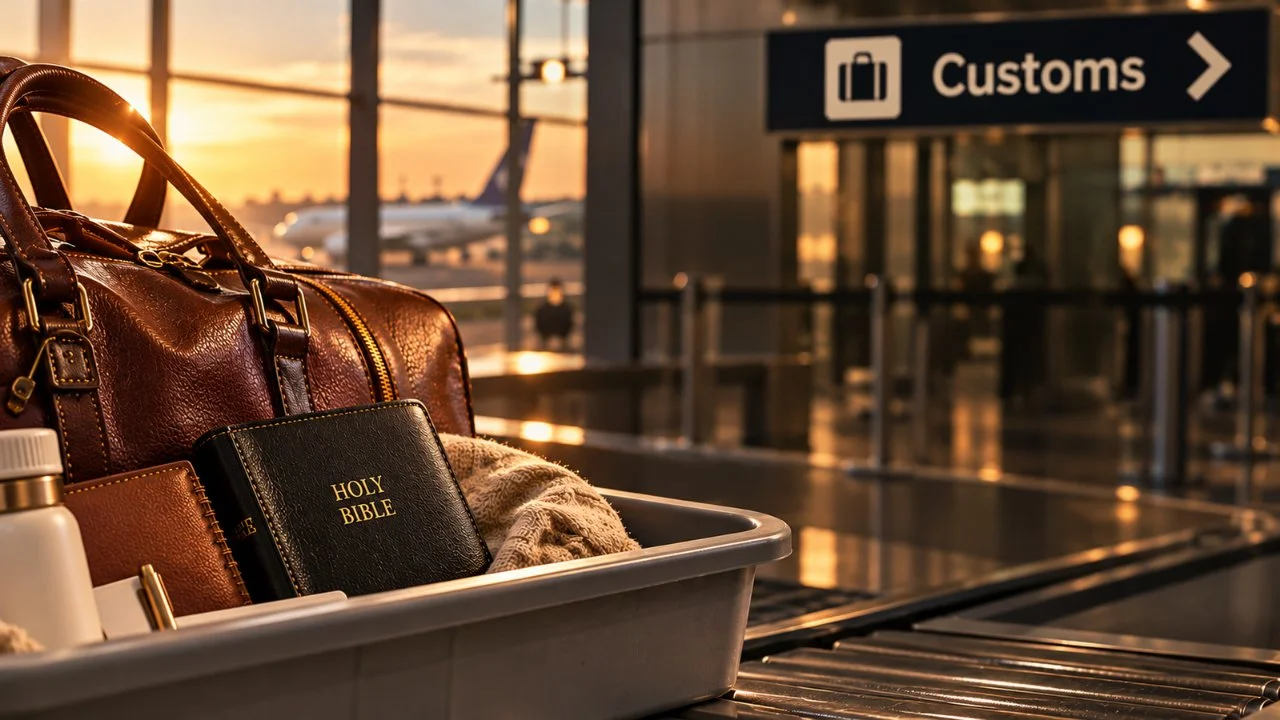
What’s Your Custom?
What have you grown accustomed to carrying, and does it belong where God is taking you? Daniel’s “previously” reveals something powerful about our customs, our environments, and what must shift before we move forward.
As I’m reading the book of Daniel, I noticed something in chapter 6 that made me stop. Daniel 6:10 (ESV) says:
“When Daniel knew that the document had been signed, he went to his house where he had windows in his upper chamber open toward Jerusalem. He got down on his knees three times a day and prayed and gave thanks before his God, as he had done previously.”
Previously.
That one word caught my attention because it tells us that Daniel’s response to pressure wasn’t created by pressure. Daniel knew the decree had been signed. He knew what had been made illegal, and he knew the consequences attached to continuing to pray to God. Yet Scripture tells us that he went home, got on his knees, prayed, and gave thanks “as he had done previously.”
Prayer wasn’t something Daniel suddenly developed because trouble came. It was already his custom. The decree changed, his circumstances changed, and the threat against his life changed, but his custom didn’t.
Pressure didn’t create Daniel’s custom; pressure exposed it.
That led me to ask myself a question: What’s my custom?
What we continually return to reveals what we have become accustomed to. When pressure comes, where do we instinctively go? Do we pray, open our Bibles, and worship? Do we reach for people before reaching for God? Do we isolate, scroll, complain, avoid, or attempt to control everything ourselves?
Sometimes we don’t recognize something as a custom because we’ve simply called it “what I do.” However, repetition creates patterns, and patterns reveal what has become familiar to us. There are godly customs worth establishing, but there are also customs we’ve grown comfortable carrying that God may be calling us to confront. When we choose to be honest about those patterns, we may discover that some are not producing righteousness and others are simply weighing us down.
Hebrews 12:1 tells us to “lay aside every weight, and sin which clings so closely” and to run with endurance the race set before us. I love that the writer distinguishes between weight and sin because everything that hinders us may not be something we would immediately identify as sin.
Sometimes it is simply weight, something familiar that we have carried for so long that we stopped asking whether it still belongs on the journey.
If we are going to run the race set before us, then there has to be some surveying and inspection. This is where I began thinking about customs at a border.
What Are You Carrying Across the Border?
When crossing an international border, customs is concerned with what you are bringing into the territory. Some things are permitted. Some things have to be declared. Some things are restricted, and some things cannot cross the border with you at all.
I wonder how often we attempt to enter into what God has set before us while carrying customs that cannot go where He is taking us.
We have to be willing to inspect what we’ve been carrying, what we’ve gotten accustomed to, what we repeatedly return to, and whether those things belong in the territory we are entering. Maybe the question is no longer simply, “Have I carried this before?” but, “Does God want me carrying this forward?”
We can become so accustomed to carrying something that familiarity begins to feel like permission. But familiarity does not equal permission.
“I’ve always done this” does not automatically mean, “This belongs where I’m going.” “This is how I normally respond” does not mean that response should remain my custom. And “this has always been a part of me” does not mean God isn’t calling me to lay it aside.
Some customs have to be left at the border.
Daniel, however, shows us the other side of this truth because some customs absolutely need to cross with us. He entered a hostile circumstance with an established life of prayer. When pressure came, he didn’t have to develop devotion in the moment; he returned to what he had already practiced.
That challenged me because we often prepare for where God is taking us by thinking about what we need to acquire. But perhaps part of preparation is asking, “What needs to become so customary in me now that when my environment changes, this remains?”
Prayer should be able to cross the border. Obedience should be able to cross the border. The Word, worship, and gratitude should be able to cross the border.
Daniel didn’t only pray three times a day; the text says that he gave thanks. Even under the threat of death, gratitude remained part of his custom. His environment did not get to dictate his devotion.
And that is the kind of custom I want. I don’t want to wait until pressure comes to establish what I should have been practicing previously. I want my relationship with God to contain practices that are so deeply established that when circumstances shift, my devotion doesn’t have to shift with them.
But I realized there is another side to surveying a journey. We cannot only inspect what we are carrying into the land. We also have to inspect the land we are entering.
Survey the Land, Too
We may be surrounded by a culture without being called to adopt its customs.
Daniel is such a powerful picture of this. He lived in Babylon. He learned within its system, served within its government, and existed among people whose beliefs and practices differed from his own. Yet proximity did not require conformity. Daniel could inhabit the land without allowing the land to inhabit his devotion.
That distinction matters for us, too.
2 Corinthians 6:17 says, “Come out from among them and be separate.” In context, Paul is calling believers away from fellowship with idolatry and spiritual compromise. Separation, then, is not merely about physical distance from everyone who believes differently from us. There is a distinction God calls His people to maintain even while living among the surrounding culture.
So discernment cannot stop with, “what am I taking with me?” We also have to ask, “what am I entering into?”
There may be places God calls us to take refuge for a season. There may be places He tells us to abide. There may be environments He allows us to occupy while He develops, positions, or uses us there. And there may also come a time when He tells us to shift.
Wherever we find ourselves, we have to survey the land. What is considered normal here? What does this environment celebrate? What does it tolerate? What is constantly being placed before me? What could I become accustomed to if I remain here long enough without discernment? What must I refuse to adopt even if everyone around me considers it ordinary?
Because customs work both ways. We carry customs into environments, but environments can also introduce customs to us.
That is why being accustomed to something deserves our attention. What initially bothered us can eventually become familiar. What once caused us to pause can become something we no longer notice. If we are not discerning, prolonged exposure can slowly become acceptance, and acceptance can eventually become participation.
This is where Daniel’s “previously” speaks again. Daniel had already determined what his custom would be before the culture demanded something different from him. His surroundings did not get to renegotiate what had already been settled between him and God.
There will be places where God calls us to remain without becoming like what surrounds us. There will be places where He calls us to move. There will be things we must leave at the border, and there will be godly customs we must protect once we cross it.
So perhaps the inspection has two parts: Survey what you’re carrying, and survey where you’re going.
Ask the Holy Spirit to reveal what has become normal in you and what is becoming normal around you. Pay attention to what you are carrying, but also pay attention to what your environment is asking you to pick up.
My Prayer
Lord, reveal to me:
What has become my custom
What I have grown accustomed to that needs to be laid aside
What cannot cross the border into where You are taking me
What in my environment I must remain separate from
What godly customs You desire to establish and strengthen in me
May my devotion to You become so established that changing circumstances and changing environments do not change my response to You. In Jesus’ name, amen.
As you move forward, survey both the baggage and the land. Pay attention to what you’re carrying, what you’re being exposed to, and what you’re becoming accustomed to. Keep what God has established, leave what He has told you to lay aside, and remain discerning enough to recognize when it is time to move.
shift and be sifted

The Table
Somewhere along the way, we stopped meeting at the table. We are still eating, but we are not always eating together. The Word of God is living, sustaining, and filling, and there is something beautiful about gathering with people you love to open it, discuss it, and grow together. So consider this your invitation to come sit with us. Bring your Bible, bring your questions, bring your hunger. There is room for you here, and we would love to have you at the table.
Somewhere along the way, we stopped meeting at the table.
We still eat. We still get full. We still receive what we need. But instead of gathering together, we have learned to take our plates to our respective places. One person retreats to the den. Someone else eats at the kitchen counter. Another takes their plate to the bedroom. We are all eating from the same kitchen, under the same roof, but we are not necessarily eating together.
And lately, I have been thinking about what we lose when we stop coming to the table.
There is something beautiful about a table that has been prepared. The place settings are arranged. The chairs have been pulled out. The food has been graciously and lovingly prepared for everyone to partake. And instead of grabbing a plate and disappearing into separate rooms, we sit together.
We eat. We talk. We listen. Someone notices something in the meal that someone else did not. Someone asks a question. Someone reaches across the table and passes what another person needs.
This is what I have come to love so deeply about Bible study.
The Word of God is UHMAZING. It is living. It is sustaining. It is nourishing. It corrects us, comforts us, strengthens us, reveals God to us, and prepares us for the lives we have been called to live.
Jeremiah said, “Thy words were found, and I did eat them; and thy word was unto me the joy and rejoicing of mine heart.” Jeremiah 15:16 KJV
There is something to eat here.
Jesus Himself said that we do not live by bread alone, but by every word that proceeds from the mouth of God in Matthew 4:4.
So yes, you can eat at home. You can open your Bible by yourself. You can study from your bedroom. You can meet God at the kitchen counter with your coffee beside you and your Bible open. You can receive revelation in the car and spend beautiful, necessary time alone with God.
Please do. Private devotion matters.
But private devotion was never meant to replace the beauty of gathering.
Acts 2:42 tells us that the early believers “continued stedfastly in the apostles’ doctrine and fellowship.” Then Acts 2:46 gives us this beautiful picture of them continuing together, breaking bread from house to house. They had devotion, and they had fellowship. They had the Word, and they had one another.
There is something that happens when we bring what God has been teaching us privately into a room with other believers who have also been sitting with Him.
I can tell you what I noticed in the text, and you may see something I completely overlooked. You can ask the question someone else was afraid to ask. Someone can share what God has walked them through, and suddenly the scripture we have been reading becomes something we can see lived out. We sharpen one another. We encourage one another. We correct one another in love. We make room for questions, revelation, and growth.
Colossians 3:16 says, “Let the word of Christ dwell in you richly in all wisdom; teaching and admonishing one another…”
One another. There are portions of our growth that require another.
This is why I believe so deeply in gathering around the Word. Not because you cannot study without us. Not because you need DTV to hear God. Not because Tuesday night is somehow more sacred than the time you spend alone with Him. But because we are the Body of Christ, and the Body was never designed to live as disconnected parts.
First Corinthians 12 teaches us that the body is made of many members, yet it is still one body. The eye cannot tell the hand, “I have no need of thee.” Every member has a place. Every member matters.
So when I say the Body needs you here, I mean it.
Your questions matter. Your testimony matters. Your perspective matters. Your hunger matters. What God is developing in you may become encouragement for the person sitting beside you, and what they carry may be exactly what God uses to strengthen you.
And there is no kiddie table.
There is no separate place for the people who know all the scriptures while everyone still trying to find Habakkuk sits somewhere else. There is room for the person who has known God for decades and the person who met Him recently. There is room for the person with highlighted pages and years of notes and the person opening a Bible for the first time. There is room for questions. There is room for growth. There is room for the hungry.
There is room for you.
Hebrews 10:24-25 reminds us not to forsake gathering together, but to encourage one another. Gathering is not simply about occupying the same room. It is about participating in the life of the Body.
And that is what I want Drop The Verses to continue becoming.
Not a performance. Not a room where one person knows everything and everyone else simply listens. A community where the Word is opened, questions are welcomed, revelation is shared, truth is honored, Jesus is centered, and we grow together.
Because one thing the Word gon do is, DROP.
Jeremiah 23:29 says, “Is not my word like as a fire? saith the LORD; and like a hammer that breaketh the rock in pieces?”
His Word has weight. His Word does the work. We are simply making room to receive it together.
And when we gather, my prayer is that we do not simply leave full. I pray we leave prepared.
Prepared to live what we have read. Prepared to pray what we have learned. Prepared to love people well. Prepared to recognize truth. Prepared to share the Gospel. Prepared to withstand what comes against us. Prepared to become doers of the Word and not hearers only, just as James 1:22 instructs us.
Because the goal was never to eat just so we could say we ate.
We eat because we need strength for where we are going.
So this is the invitation: come hungry and come expectant. Bring your Bible. Bring your questions. Bring what God has been showing you. Bring the parts you understand and the parts you are still wrestling with. Come ready to listen, participate, receive, and grow. There is a place for you in this conversation, and there is something beautiful about what happens when we choose to be present with God and with one another.
But I also want this invitation to extend beyond Drop The Verses. Go to your local church. Be planted. Be present. Gather with other believers. Sit under sound biblical teaching. Ask questions. Build relationships. Serve. Listen. Learn. Be a part of the conversation. Online community can be a beautiful supplement, but it should never become a substitute for being present within a local body of believers.
And when Tuesday comes, pull up a chair.
Drop The Verses Bible Study is held every Tuesday evening, and I would love for you to be in the room.
Come hungry. Come expectant. Leave prepared.
There is room at the table, and we saved you a seat.
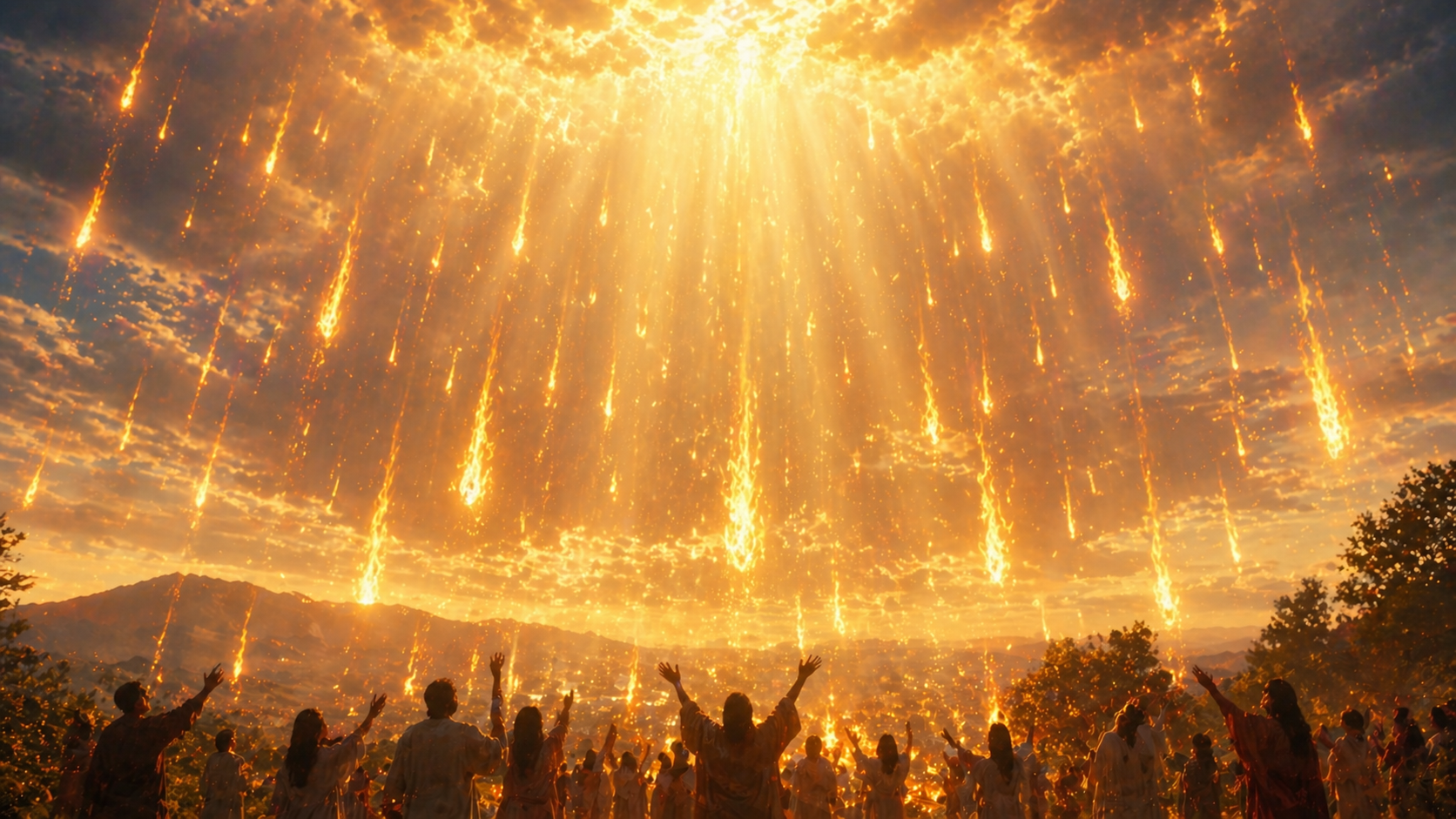
Fresh Fire
If your fire is real, it will spread. If it is sustained, it will endure. If it is holy, it will cost you everything.
There are moments in our walk with God where language has to shift from poetic to plain, from reflective to sobering. This is one of those moments. Because this is not about inspiration, this is about alignment, this is about consecration, this is about urgency.
I have been in awe of God as an all-consuming fire. More recently, I’ve pounded on my belly in worship, praying and receiving fresh fire from God, along with a fresh infilling of The Holy Spirit. It says in John 7:38 that “out of our bellies will flow rivers of living water,” all while simultaneously we are needing to receive fresh fire from The Lord.
There is a tension here that we cannot ignore. We are called to be filled and overflowing, yet many are running dry. We are called to carry both the fire and the flow, yet we have settled for moments that do not sustain either. Fresh fire is not a trend, it is a necessity in this hour, because without it, what we carry becomes routine, and what was once alive becomes mechanical, lacking the power, presence, and purity that mark a life truly consumed by God.
Scripture does not describe God as warm, gentle heat alone. It says in Hebrews 12:29 that “our God is a consuming fire.” And when we hear that, we have to ask ourselves honestly: What does that actually look like?
For most of us, the closest natural picture is a forest fire. Not controlled, not partial, not selective. When a tree is ignited, it is not just the leaves that burn, it is not just the bark that is affected. The entire tree is overtaken. And because trees stand close together, what happens? The fire spreads.
So here is the question that we cannot avoid: If we claim to be on fire for God, why is there no evidence of spread? Why are the people in close proximity to us not being ignited? Not emotionally moved, not temporarily inspired, but transformed.
This is not condemnation, this is introspection.
There has been a call echoing through the Body of Christ, and it is not new. It is simply being re-emphasized with urgency. The time is over for:
strange fire
mixture
dying flames
In Leviticus 10:1–11, Nadab and Abihu offered strange fire before the Lord, fire that He did not command. And the result was immediate. God did not accept what looked spiritual. He rejected what was unauthorized.
In Exodus 30:29–33, the oil was holy, set apart, not to be replicated casually or used commonly. Because what is consecrated cannot be mixed.
And yet, mixture has become comfortable. In 1 Kings 18:21, Elijah asks, “How long will you waver between two opinions?” How long will we try to carry God and culture, truth and compromise, fire and flesh at the same time?
We cannot produce holy fire with a divided life.
Then there is the matter of maintenance. Because fire is not just received, it is stewarded. In Leviticus 6:12–13, the command is clear: The fire on the altar must be kept burning. It must not go out. This means there is a responsibility, there is a rhythm, there is a discipline. Fresh fire is not just a moment at the altar. It is a lifestyle of tending.
And yet, we have settled for moments instead of maintenance.
We say we are a light, but Scripture is very specific. In Matthew 5:14–16, “You are the light of the world. A city set on a hill cannot be hidden.” Light is not meant to be contained. It is meant to be seen. It affects everything around it.
And then there is this promise in Isaiah 42:3: “A bruised reed He will not break, and a smoldering wick He will not snuff out.” God is merciful toward what is barely burning. But hear this clearly: His mercy is not permission to stay dim. It is an invitation to be rekindled.
So we are not just in need of fresh fire. We are in need of oil. Because oil is what sustains fire. In Matthew 25:1–13, the wise virgins were not separated by appearance. They were separated by preparation. They had oil. They had reserve. They had readiness.
This is the hour where identity must be understood rightly. We are:
marked
consecrated
set apart
anointed
appointed
Not for comfort, not for performance, but for God’s purpose and His pleasure. As it says in 1 Peter 2:9, “You are a chosen generation, a royal priesthood, a holy nation, His own special people…”
There are souls attached to our obedience. This is not dramatic. This is truth.
The time is over for playing with fire. The time is over for dim flames that cannot reach anyone else. The time is over for calling emotional moments encounters.
Let this be the challenge: burn for God without compromise.
Do not dim your flame to be accepted by the masses. Do not silence what God has done in you to make others comfortable.
Encourage your brothers and sisters in Christ to remain steadfast, to remain set apart, to remain on fire.
Post the testimony. Share the Scriptures. Pray ALOUD.
Live in such a way that your life points back to Him without apology and without hesitation.
This is not the hour to blend in, this is the hour to stand out, fully surrendered and fully consumed.
Because God is STILL a consuming fire.
The question is not whether He burns, the question is: will we allow Him to consume everything in us that competes with Him?
Because when a life is truly set ablaze, it does not stay contained. It spreads, it reaches, it transforms.
Fresh fire is not a feeling, it is a surrender.
And in that surrender, everything that is not like Him burns.
Transition In Stillness
A vulnerable reflection on being in between seasons. This piece explores how stillness is not stagnation, but a sacred space where God develops patience, endurance, and identity. A reminder that we are not chasing arrival, but becoming in the process.
There is something uncomfortable about being in between.
Not where you used to be.
Not yet where you believe God is taking you.
Just… here.
And if I’m honest, this space does not always feel holy. It feels quiet. It feels uncertain. It feels like nothing is happening. But I am learning that just because something is still does not mean God is not moving.
Scripture says in Psalm 46:10, “Be still, and know that I am God.”
Not rush and know. Not strive and know.
Be still.
Stillness has a way of confronting everything in you that depends on movement to feel secure. It exposes the parts of me that equated progress with noise, visibility, and arrival. But transition is not loud. It is often deeply silent.
I am in a new place. A new season. A new chapter.
And while there is excitement, there is also a refining that I did not anticipate. Because I thought I was waiting on a moment.
God is developing a posture.
You see, patience is not a time frame. It is a posture. And that posture is not passive. It is active, stretching, and deeply intentional. Galatians 5:22 (AMP) breaks it down in a way that leaves no room for misunderstanding. It says the fruit of the Spirit [the result of His presence within us] is love [unselfish concern for others], joy, [inner] peace, patience [not the ability to wait, but how we act while waiting], kindness, goodness, faithfulness, gentleness, and self-control.
That part right there changed everything for me. Patience is not about counting days. It is about character being formed while time passes. Transition is not rushed because transformation cannot be microwaved. We love the idea of arrival. The “I’m here” moment. The visible breakthrough. The answered prayer that everybody can see and celebrate. But God is not fixated on the destination the way we are. He is after the development that happens in the movement. Because if I arrive without being developed, I will mishandle what I prayed for.
Isaiah 43:18-19 says, “Do not remember the former things, nor consider the things of old. Behold, I am doing a new thing, now it springs forth, shall you not know it?”
The new thing is not just a place.
It is a process and sometimes the hardest part about God doing a new thing is that it requires me to release the old one without fully seeing the new one yet. That is where stillness stretches me. Because I want clarity. God is asking for trust.
Philippians 4:6-7 reminds me, “Do not be anxious about anything, but in everything, by prayer and petition, with thanksgiving, present your requests to God. And the peace of God, which surpasses all understanding, will guard your heart and your mind in Christ Jesus.”
Peace becomes the evidence that God is working, even when I cannot trace what He is doing.
And then there is endurance.
We talk about faith. We talk about favor. But endurance is where the real work happens.
James 1:2-4 says to count it all joy when we face trials, because the testing of our faith produces endurance. And endurance, when it finishes its work, makes us mature and complete, lacking nothing.
Endurance is not glamorous.
It is showing up when you feel unseen.
It is trusting when you feel unsure.
It is continuing when you feel like stopping.
Endurance is the work.
Perseverance is the sweat beads.
Endurance is what God is building in the unseen. Perseverance is what people notice when you keep going and I am realizing that this in-between space is not empty. It is full.
Full of pruning.
Full of stretching.
Full of God gently removing what cannot go with me into what He has prepared.
I am not behind.
I am being built.
So no, I have not had the “boom, I’m here” moment. But I am walking. And this walk is purifying me. It is edifying me, it is producing something in me that arrival alone never could.
Stillness is not stagnation.
It is surrender and this transition is not something I have to rush through. It is something I am being refined in.
So if you find yourself here too
in between
in transition
in stillness
Know this God is not delaying you, He is developing you and what He is producing in you is far greater than where you think you are going.
in stillness, God is moving

A Government VS The Kingdom
In a world where governments restrict, the Kingdom releases. As policies shift and fear rises, we’re reminded that our roots aren’t in systems that shake but in a Savior who reigns. The enemy may give a thousand reasons to doubt, but God gives one reason to trust, and that one truth silences every lie. This isn’t the time to wonder when or how, but to remember who.
With the climate of this world and particularly within the U.S., it’s easy to see how government can both structure and strangle a nation. Policies shift like sand, leaders rise and fall, and every four years we brace ourselves for another wave of division. We pledge allegiance to systems that promise order yet often deliver chaos.
But when we look to the Kingdom of God, there’s a different rhythm. A steadier heartbeat. A government that cannot be voted in or voted out, one that isn’t swayed by polls or politics, but ruled by the eternal King whose Word stands forever.
“For the Lord is our judge, the Lord is our lawgiver, the Lord is our king; it is He who will save us.” — Isaiah 33:22
That single verse dismantles every manmade hierarchy. The Kingdom doesn’t operate on the same infrastructure as democracy or party lines. It operates on divine authority, holy justice, and eternal sovereignty. In the Kingdom, God is not up for election. He is the government.
And this truth hits home for me in a personal way. With my husband being in the military, we often feel the weight of decisions made by leaders and officials far above us. Orders shift, policies change, and sometimes those choices directly affect our home, our time, and our peace. We have to acknowledge the government, yet we choose to serve the Kingdom.
Because while governments of this world may dictate where we go or how long we stay, the Kingdom determines who we are and what we carry. We are not planted in systems that shift; we are trees of righteousness, rooted in Christ Jesus. When storms come, when leadership changes, when uncertainty lingers, our roots remain.
“And the Lord, He is the one who goes before you. He will be with you, He will not leave you nor forsake you; do not fear nor be dismayed.” — Deuteronomy 31:8
God never said we wouldn’t feel fear. He said don’t give it authority. Don’t let it govern your heart. He’s already gone before us. He’s already secured the outcome.
The enemy will give us every reason to doubt God, and God will give us one reason why we should trust Him, and that one truth demolishes every lie, every counterfeit, and every shadow of doubt. This isn’t the time to wonder when or how, but to be reminded of WHO.
To the soldiers who serve, those who wake up daily under orders not their own, I honor you. You may wear the uniform of this nation, but you belong to a higher Commander. You stand as both defender of freedom and vessel of faith. When discipline wears you down, remember your endurance mirrors Christ’s strength in you. You are not unseen. Heaven notices your obedience even when the world does not.
To the spouses and children of service members, and to the families of federal employees, those who sacrifice the quiet stability of “normal” life, I see you. Your faithfulness matters. You carry an unseen weight with unseen grace. Every time you say goodbye, every time you hold your household together while navigating uncertainty, you’re reflecting the steadiness of the God who never leaves nor forsakes.
Even within man’s government, you are representatives of God’s Kingdom. Your home is a mission field. Your endurance is a testimony. Your hope is a light.
Jesus said, “My Kingdom is not of this world” (John 18:36). He wasn’t drawing a line of separation; He was revealing the difference between control and covenant. The government of man tries to control outcomes; the Kingdom of God transforms hearts. The government legislates behavior; the Kingdom liberates identity. One demands compliance; the other births conviction.
When earthly governments crumble, the Kingdom stands unshaken. When policies change overnight, Heaven’s constitution remains the same.
“And the government shall be upon His shoulders…” — Isaiah 9:6
That means the true weight of leadership rests on Christ, not Congress. His shoulders can bear what no human system can sustain. And when we anchor our hope in Him, we no longer panic with every breaking headline; we posture our hearts in peace.
The world shouts about rights, freedoms, and independence, but the Kingdom whispers of righteousness, freedom in Christ, and dependence on the King. True liberty isn’t found in the absence of laws but in the presence of the Lawgiver Himself.
If you’ve ever felt heavy about the direction of this nation, the corruption, the compromise, the chaos, remember this: you were not created to fit comfortably in a fallen system. You were called to represent a higher one. You’re an ambassador of Heaven, not a citizen trapped by fear.
“For our citizenship is in Heaven.” — Philippians 3:20
So while governments will argue, economies will fluctuate, and leaders will fail, the Kingdom will always advance.
It’s unshakeable. Unbothered. Unstoppable.
And until the kingdoms of this world become the Kingdom of our Lord and His Christ, we live in the tension, governing our hearts with His peace while influencing the earth with His truth.
Because while governments can hinder, the Kingdom heals.
While governments restrict, the Kingdom releases.
While governments divide, the Kingdom unites.
And in the end, every nation, every leader, every law will bow to the only Name worthy of governing all: